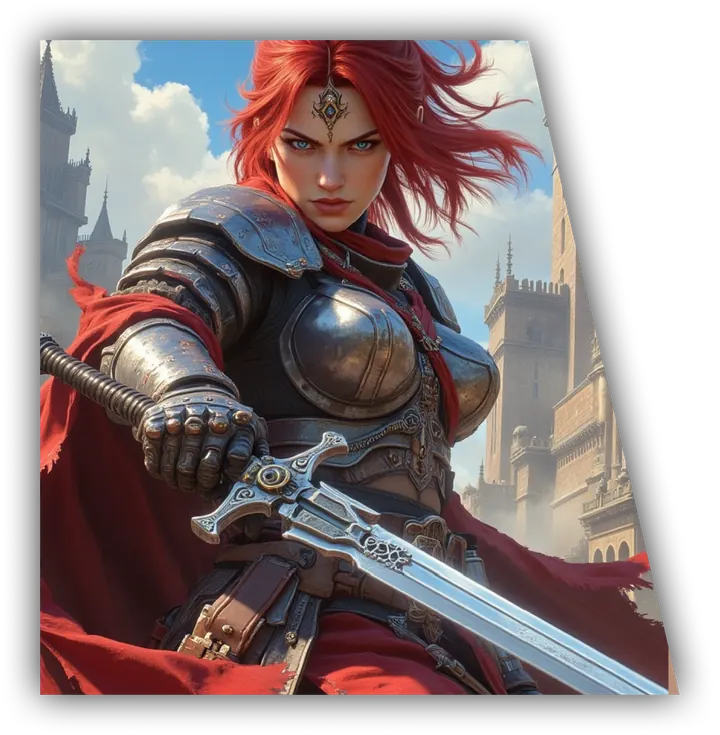
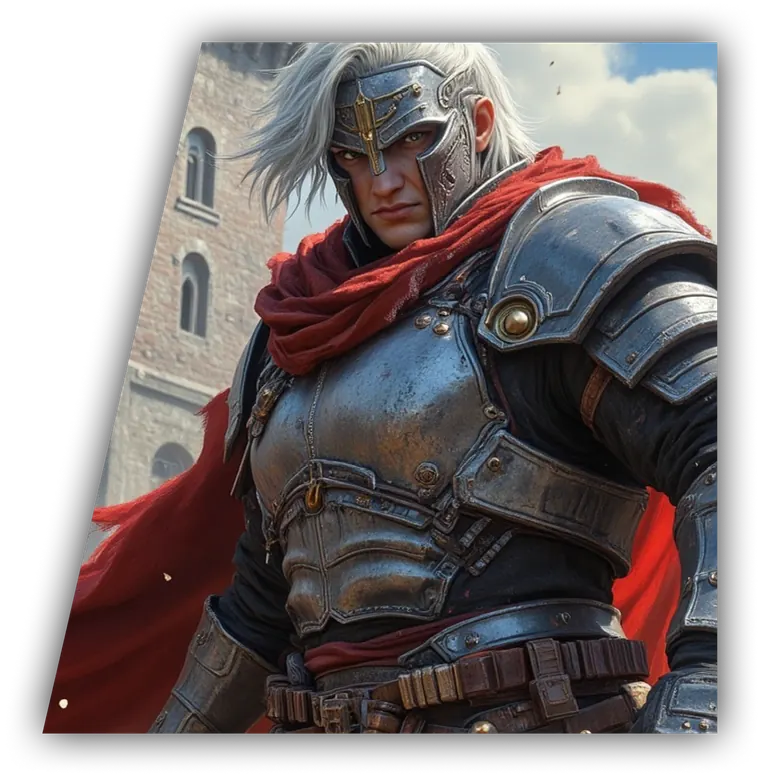
Romantasy, Playable
Romantasy conquered the bookshelf because fantasy stakes raise romance stakes. Here is what happens when you stop reading the genre and start playing it.
Ten years ago, "romantasy" was a word you had to explain. It sounded like a joke portmanteau, the kind of label a bookseller invents on a slow Tuesday — romance, but with dragons; fantasy, but everyone is in love. Then something happened that publishing still hasn't fully metabolized. The joke shelf became the biggest shelf in the store. Books with fae courts and slow-burn courtships started outselling nearly everything around them, readers organized entire online communities around them, and the industry stopped smirking and started printing special editions with sprayed edges. Anyone searching for romantasy games right now is part of the same wave: readers who finished the shelf and want more than the shelf can give.
If you want the short answer, here it is. Romantasy games are interactive stories where a fantasy world and a love story share the same stakes — where the courtship is entangled with courts, wars, bargains, and magic, and your choices move both at once. The best of them, including AI story games, let you speak and act as the protagonist rather than pick from a menu, so the romance responds to what you actually say. That is the difference between reading a slow burn and standing inside one.
But the short answer skips the interesting question, which is why this genre — of all genres — turned out to be the one readers most wanted to climb inside.
Why romantasy won the bookshelf
The lazy explanation for romantasy's rise is escapism, and it explains nothing. All fiction is escape; readers do not flee to one shelf in these numbers by accident. The better explanation is structural: romantasy solved a problem each of its parent genres had on its own.
Pure romance has swoon but must manufacture stakes. The obstacles between two people — pride, timing, a misunderstanding at a wedding — are real but small, and the genre has spent two centuries inventing ways to make them feel larger. Pure fantasy has stakes but often forgets the swoon. Kingdoms fall, prophecies grind forward, and somewhere in chapter forty the hero notices another person exists.
Romantasy fuses the two so that each repairs the other. When the person you are falling for is the emissary of an enemy court, the misunderstanding at the wedding is a diplomatic incident. When the war's outcome hinges on a marriage alliance, every glance across a ballroom carries the weight of armies. The fantasy stakes raise the romance stakes: a courtship where wars, courts, and magic care about the outcome is a courtship where nothing is trivial. And the romance repays the debt, because a war matters more when someone you love is standing in it.
That is the engine. Not dragons, not fae princes — leverage. Romantasy readers are not choosing between feelings and consequences. They found the shelf where feelings are consequences.
What readers of the genre actually want
Talk to devoted romantasy readers — or just read the way they talk about the books — and a consistent set of hungers emerges.
They want tension that is earned. The slow burn is the genre's signature move, and it only works when something real holds the two people apart: an oath, a throne, a species, a secret. Contrivance kills it. Structure sustains it.
They want banter with an edge. The enemies-to-lovers arc dominates the genre because verbal fencing is courtship conducted under deniability. Every barbed exchange is a negotiation in which neither party can admit what is being negotiated.
They want agency in the heroine — or the hero, or whoever stands at the center. The genre's protagonists bargain, scheme, refuse, and choose. The love story is something they drive, not something that happens to them.
And they want the world to notice. When the couple finally crosses the line, the genre's promise is that the world reacts — courts realign, magic answers, someone declares something unwise. The romance is not a subplot. It is a lever set against the plot's largest stone.
Hold that list up to the light and something becomes obvious: every one of those hungers is a hunger for participation. Earned tension asks you to feel the wait. Banter asks you to imagine your own reply. Agency asks you to identify with the chooser. A world that notices asks you to believe your presence matters. Romantasy is a reading experience straining toward being a playing experience. Which is why the search for a fantasy romance game is not a departure from the books. It is the books' logical conclusion.
What happens when you play it instead
Take each of those hungers and ask what play does to it.
The slow burn, played, becomes something a page can never make it: your own restraint. On the page, the author decides how long the tension holds. In a story you play, you decide — and that changes the texture entirely. Say you spend an evening inside a story where the rival lord has just offered you an alliance sealed by marriage, and you know accepting would end the war and end the tension in the same stroke. The page asks you to watch a character hesitate. Play asks you to hesitate. The wait stops being pacing and becomes temptation.
Banter, played, becomes real fencing. When you type the barbed reply yourself — when you choose whether to wound, deflect, or let something honest slip through — the deniability is yours to maintain or abandon. The thrill of enemies-to-lovers has always been watching two people say everything except the true thing. Playing it means feeling the true thing press against your own teeth.
Agency stops being vicarious. This is the bluntest change and the deepest one. The genre's readers already lean forward when the heroine refuses the bargain; play removes the glass. You refuse the bargain. Or you take it, because the terms tempted you, and now you live inside a story the shelf never printed: the one where the alliance happened and the feelings came anyway.
And the world noticing — the genre's grandest promise — becomes literal. In a played romantasy, the court genuinely responds to what you did at the ball, because what happened at the ball was not fixed in advance. The stakes-and-swoon engine does not merely survive the move from page to play. It runs hotter, because both of its cylinders — consequence and feeling — are now yours.
What romantasy games need to get right
Not every interactive love story earns the genre's name, and readers can tell. A romantasy interactive fiction worth the shelf it came from needs three things.
It needs a world with its own agenda. If the fantasy is wallpaper — a castle backdrop behind an otherwise ordinary courtship — the engine never starts. The courts must want things. The magic must cost things. The war must proceed whether or not you are ready to admit your feelings.
It needs a love interest with a spine. A paramour who agrees with everything you say is not a slow burn; it is a warm bath. The genre's electricity comes from wanting someone who is genuinely other — loyal to a different crown, bound by a different oath, capable of saying no.
And it needs memory. This is the quiet requirement underneath the other two. A slow burn is an accumulation: the glance in chapter three matters because it is still glowing in chapter thirty. A story that forgets what was almost said on the terrace cannot burn slowly, because it cannot burn at all. The moments have to stack.
Where Runebook fits
Runebook is an AI story game built around a Storyteller who runs the world — its courts, its bargains, its inconvenient wars — while you play the person at the center of it. You act by typing what you want to say or do, so the barbed reply at the masquerade is genuinely yours, and the Storyteller answers in kind: scenes unfold with narration read aloud and imagery to match. The story remembers what matters, which is precisely what a slow burn requires — the almost-confession on the terrace is still glowing three sessions later, waiting.
You can begin from fantasy, romance, or anywhere the two meet, or start a custom story from your own idea — your own court, your own war, your own impossible person. If you want to see how the genre's engine behaves under your hands, our guide to the AI romance game is the place to start; if you care most about consequence, we've written about romance games where choices matter, and if you'd rather scheme from the other side of the ballroom, you can play the villainess. And for the deepest of the genre's doors — exact words, old debts, a beautiful creature who forgets nothing — our guide to fae courts and their bargains is waiting.
The shelf gave you stakes and swoon. Play gives you the third thing the genre was always reaching for: your own hand extended across the ballroom, and a world that holds its breath to see what you do next. Create an account and start your first story — it's included. Start your story.